
Description
Editable transport compliance toolkit
Turn the requirement into a working, evidenced system
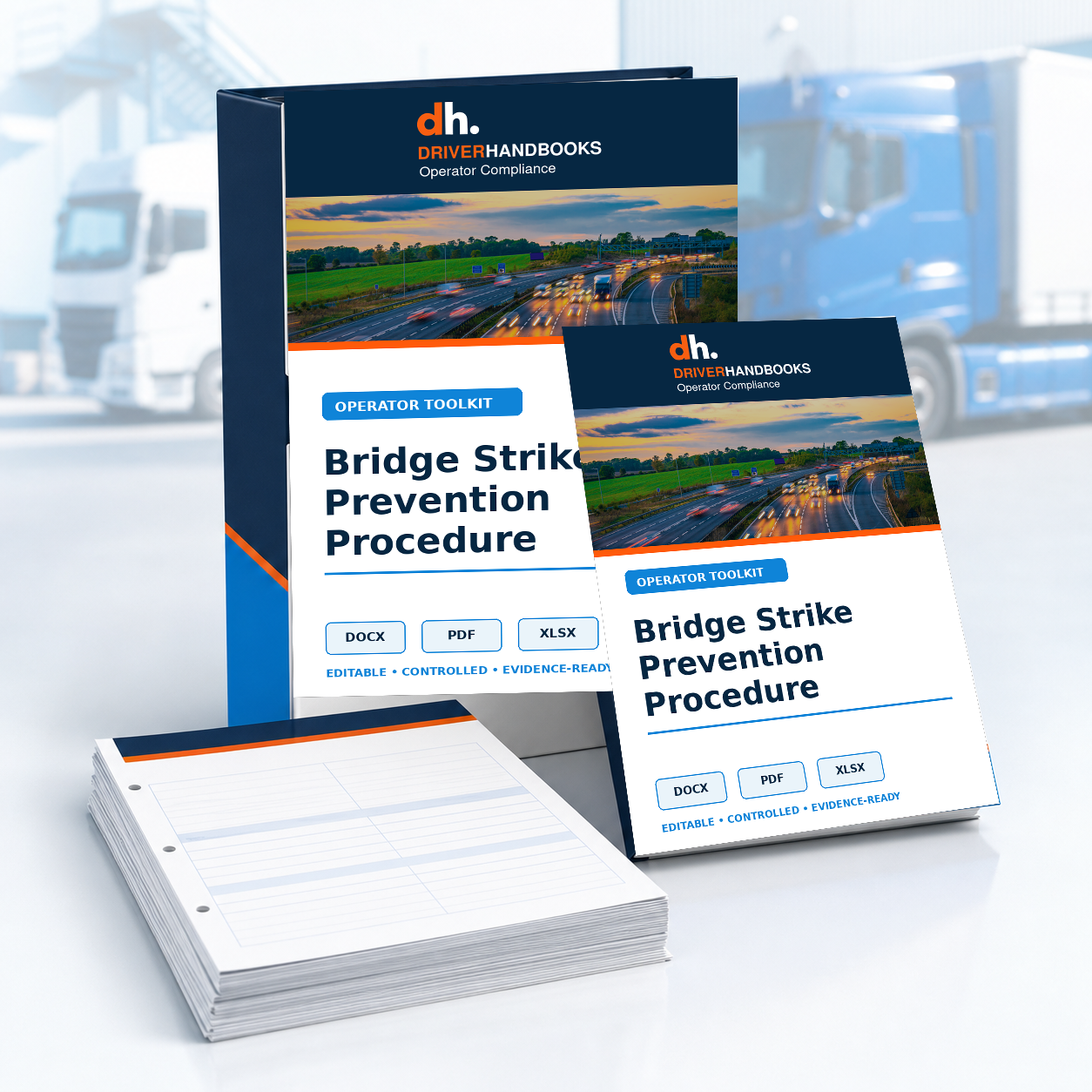
Editable bridge strike prevention procedure with route planning rules, height recording forms, cab cards and clear strike response and reporting steps.
Why a written bridge strike prevention procedure matters
Few incidents put an operator in front of a Traffic Commissioner faster than hitting a bridge. In the public inquiries we have attended over 25 years, the first question is never about the driver’s eyesight: it is about the system. Was there a bridge strike prevention procedure, was the driver trained on it, and can you prove both?
This bridge strike prevention pack gives you the written procedure, the route planning discipline and the in-cab tools to answer yes, and it reflects what DVSA and the railway authorities expect a professional operator to have in place.
What is inside
- The core bridge strike prevention procedure covering planning, driving and incident response.
- Route planning rules that require height and route checks before every journey, not just unfamiliar ones.
- A height recording form so vehicle height is measured and logged whenever a trailer, body or load changes it.
- A printable cab card template that keeps the current travelling height in the driver’s eyeline.
- Strike response steps: stop safely, keep people clear, call 999 and the number on the bridge identification plate, and never move the vehicle until authorised.
- Reporting and investigation forms covering the internal review and the notifications expected of licence holders.
Who it is for
Any operator running vehicles tall enough to meet a low bridge, which in practice means every HGV and PSV fleet and plenty of vans with racking or roof equipment. Transport managers use the pack at induction so new and agency drivers can be shown the bridge strike procedure before their first shift, and again after any near miss. Insurers and prosecutors ask for the same paperwork, so having bridge strike prevention documented protects the business as well as the driver.
Format and updates
The bridge strike prevention procedure arrives in editable Word format with a version control sheet at the front. Add your fleet details, name the person who signs off route plans, and record every amendment with a date and an approver.
How to put the pack into use
- Replace every marked placeholder.
- Compare the controls with your vehicles, work, licence commitments and current official guidance.
- Remove irrelevant options and add local responsibilities and escalation routes.
- Approve a controlled version and brief affected people.
- Use the registers, sample completed records and correct failures.
Questions about this pack
Does the pack cover drivers who use car sat navs?
Yes. The route planning rules require navigation set to the vehicle's height and prohibit car mode devices for commercial journeys, with a briefing note you can use at toolbox talks.
What should a driver do immediately after a strike?
Follow the response card: stop, secure the scene, call 999 and the number on the bridge plate, and stay put. Moving a vehicle from under a railway bridge before the line is checked is the single worst decision a driver can make.



Reviews
There are no reviews yet.