
Fixed quotes, reply within one working day
It is a fair question and it deserves a straight answer, so here is the honest structure of it.
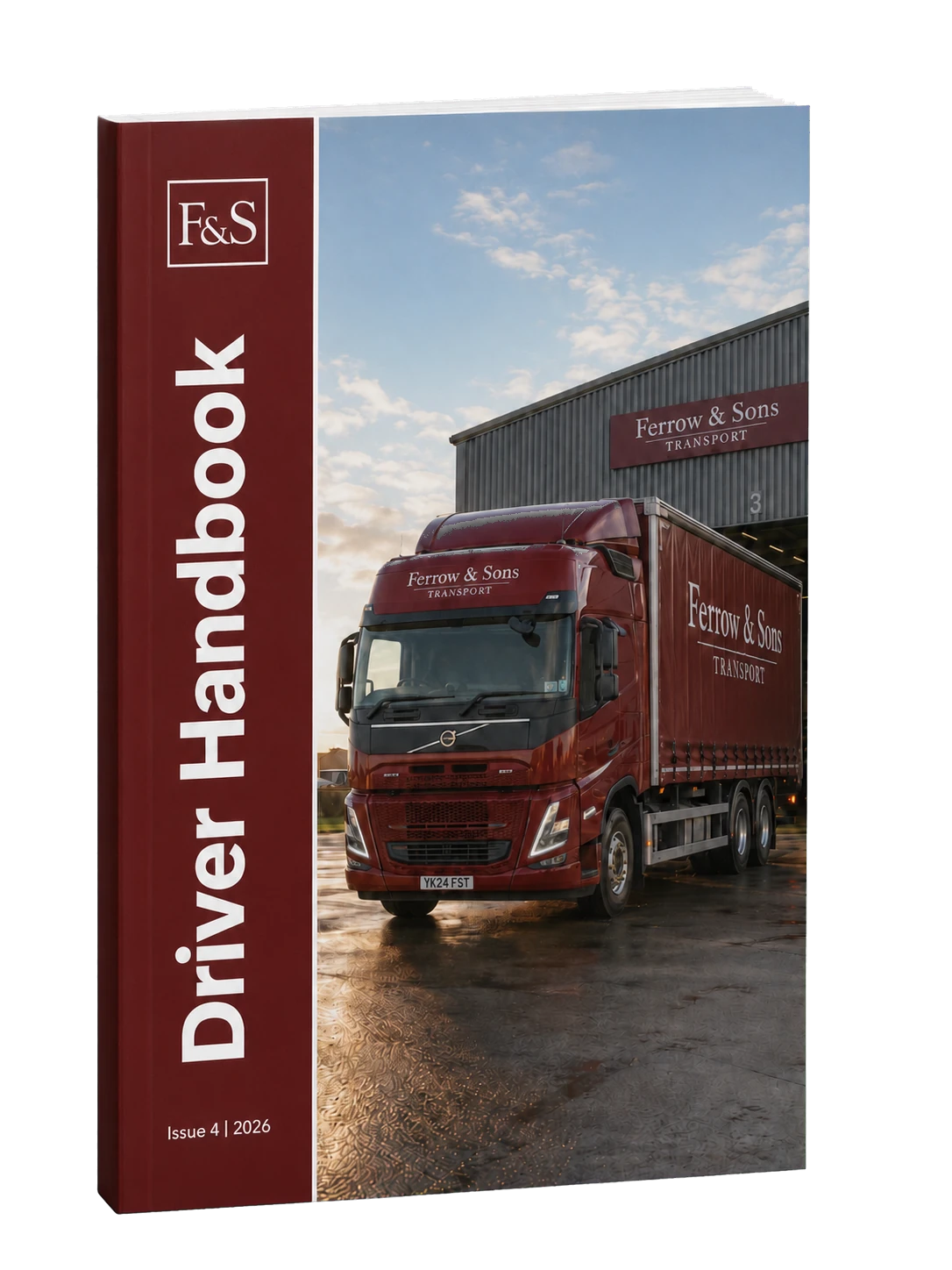
It is a fair question and it deserves a straight answer, so here is the honest structure of it.
Clear, practical support written around the operation you run and the evidence an examiner expects to see.
Answer a few focused questions. A transport manager or compliance specialist will review your answers and recommend the right next step.
Get a quoteIt is a fair question and it deserves a straight answer, so here is the honest structure of it. How much does a driver handbook cost depends on which of three routes you take: a free or low-cost template you adapt yourself, a template professionally adapted to your operation, or a fully bespoke document researched and written around your fleet. Each step up buys accuracy and defensibility, not prettier formatting.
We quote every job as a fixed fee agreed before work starts, so the price is settled before any drafting begins. We do not publish a price list, because the same document can take a day or a fortnight depending on fleet size, sectors and regulatory history, and a figure that fitted one operator would mislead the next. What we can show you is exactly what moves the driver handbook cost up and down, so you can see where your own operation sits before you ask anyone for a number.
The template route costs little or nothing in cash and a serious amount of management time. Done properly, adapting a template to a real fleet takes days of someone's attention, and done badly it produces a document that misdescribes your operation in writing.
The adapted route, where we take our own framework and fit it to your fleet, sits in the middle. It suits single-depot operations with conventional work: the structure is proven, so you pay only for the fitting.
Fully bespoke drafting carries the highest driver handbook cost because it starts with discovery: your licence and undertakings, your vehicle types, your sectors, your incident history and your existing paperwork. It is the right answer for mixed fleets, regulated sectors and any operator with a regulatory history, where a generic document would be pulled apart in the first hour of a public inquiry.
Four factors drive almost all of the variation in driver handbook cost:
None of these are padding. Every one is a place where a generic handbook would either stay silent or say something untrue about your operation.
When you compare quotes, compare what sits behind the number, because a low headline driver handbook cost often excludes the work that makes the document usable. A complete fixed fee should cover discovery time with the people who actually run the fleet, drafting matched to your operator licence undertakings, at least one full revision round based on your comments, a signed acknowledgement page and version control sheet, and delivery in an editable format you own outright. It should also say what is not included, such as printing, translation, driver training delivery or a later rewrite after a major change of operation, and how any change of scope is agreed and priced before it is worked.
Ask two questions of any supplier: who checks the draft against our licence undertakings, and what happens if DVSA or an auditor queries the content later? If the answers are vague, the saving is an illusion. A handbook is bought once and defended for years, and the defence is where cheap drafting fails.
The purchase price is not quite the whole story, and pretending otherwise would be the sales pitch rather than the truth. Rules change, fleets change and contracts change, so a handbook needs a review at least annually and after any material change. Some operators handle reviews in-house on our framework; others put the handbook on our annual review arrangement, where the yearly driver handbook cost is normally lower than the original drafting because the structure already exists and only the changes are worked.
Either way, budget for the review from day one. A handbook written in 2023 and still issued unchanged in 2026 may no longer describe the law, the fleet or the contracts it covers, and the date on the front is one of the first things a reader checks.
The most expensive driver handbook is the one that does not exist. Operators meet that cost in an afternoon: a driver incident with no written instruction to point to, a DVSA investigation where the examiner asks how drivers were told about defect reporting and the room goes quiet, or a public inquiry where the absence of documented systems reads as an absence of control. Legal representation, management time and any curtailment or suspension all carry their own costs, and they are incurred long after the handbook decision was taken.
Set against that, the driver handbook cost question rather answers itself. Pick the route that matches your fleet's complexity, insist on a fixed fee, and treat the document as licence protection rather than stationery, because that is exactly how the regulator will treat it.
Every document is shaped by transport managers and compliance specialists with more than 20 years of experience, including DVSA investigations, Public Inquiries and Traffic Commissioner hearings.
Get a quoteIt depends on fleet size, vehicle mix, sectors and regulatory history, which is why credible suppliers quote after a short discovery conversation. Insist on a fixed fee agreed in advance rather than an hourly rate.
For a small, simple fleet with time to adapt it carefully, a template can work. The risk is a document that misstates your actual procedures, which reads badly in an investigation. The cash saving buys a large hidden time cost.
The drafting is, but the document needs reviewing at least annually and after any change to the law, fleet or contracts. Annual reviews normally cost less than the original drafting because only the changes are worked.
Not proportionally. Fifty identical tractor units need little more content than ten. It is variety that adds work: mixed vehicle types, multiple sectors, several depots and agency labour each add sections that must be researched and written.
Discovery with your team, drafting checked against your licence undertakings, a revision round, a signed acknowledgement page, a version control sheet and editable files you own. Anything less and you are buying a document you cannot maintain.
Something else on your mind? Call 020 8088 8371 or use the form below.
Get a clear recommendation from transport managers and compliance specialists with more than 20 years of experience, including DVSA investigations, Public Inquiries and Traffic Commissioner hearings.