Read the symbol, number and every supplementary plate before entering the road.
Know the vehicle's maximum gross weight and the relevant actual and axle weights.
Do not assume that being lightly loaded makes a goods vehicle restriction inapplicable.
If the route or an exemption is uncertain, stop safely and contact the transport office.
Before the journey
Confirm the vehicle and trailer combination, the weights shown on the relevant plates, the load and its distribution, and the route issued for the journey. If the vehicle has changed, the load has been altered or the route has been diverted, check the route again.
A sign may apply by reference to maximum gross weight, not the weight recorded on a particular journey. Actual gross and axle weights still matter for vehicle loading and other restrictions, so carry the correct information and ask before relying on an estimate.
Two restrictions that look similar
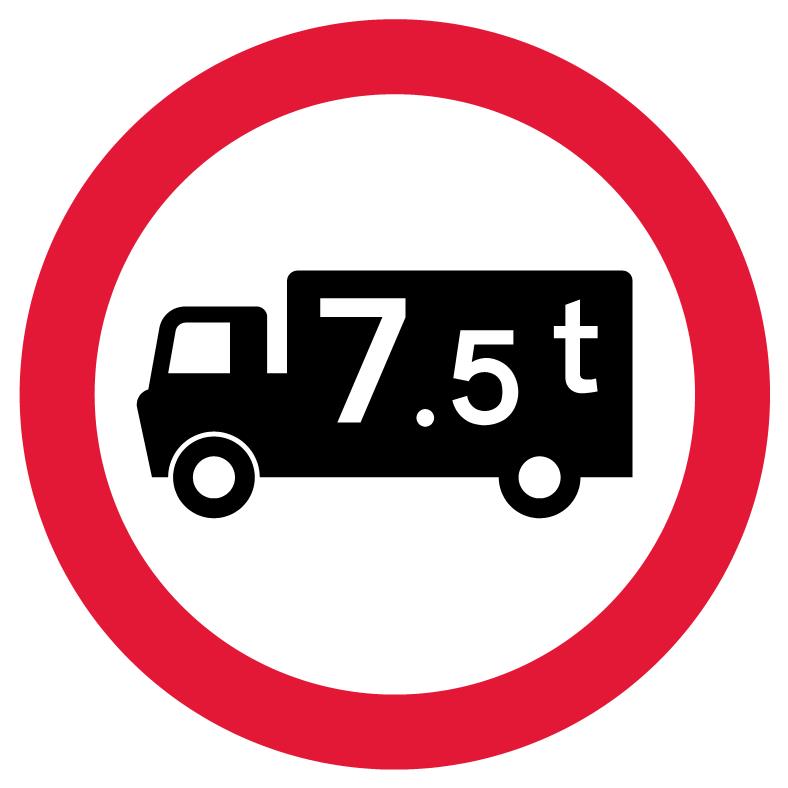
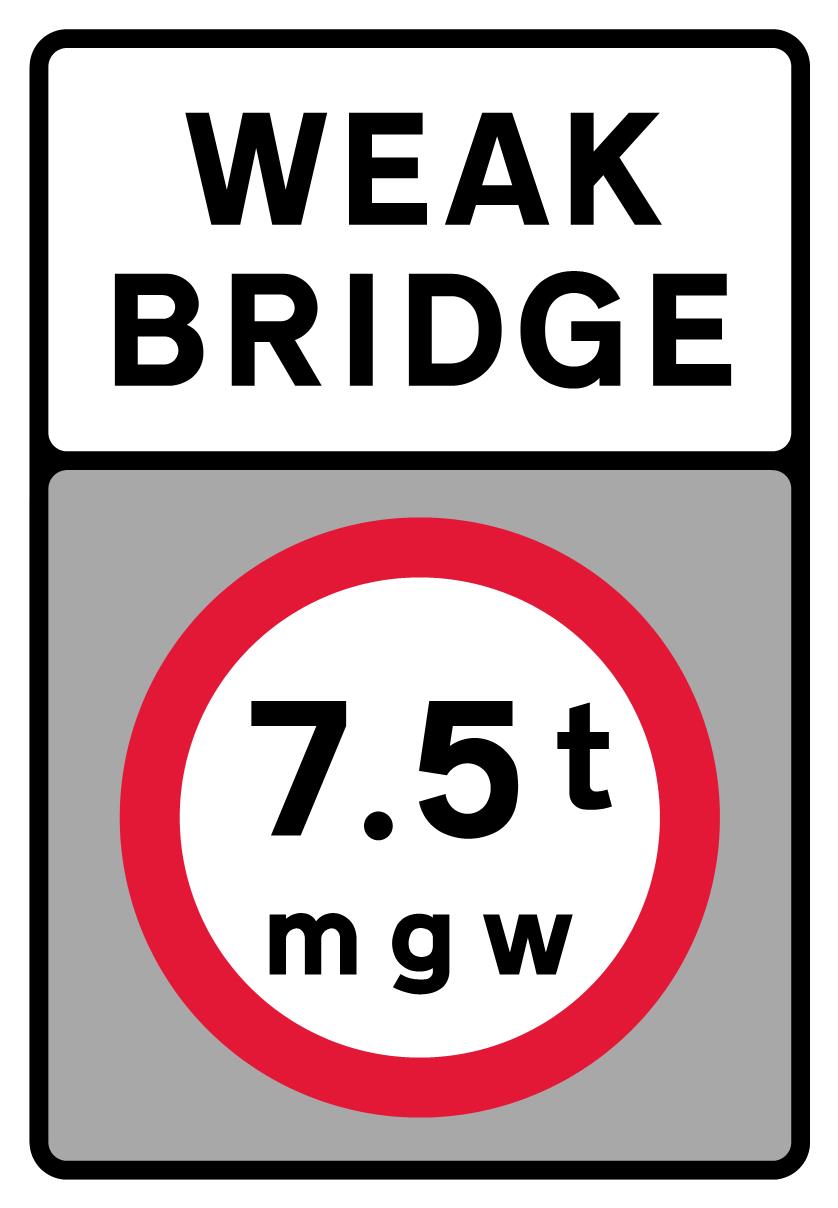
Goods vehicle restriction, diagram 622.1A. Goods vehicles over the maximum gross weight shown are prohibited.Weak bridge restriction, diagram 626.2A. Vehicles over the maximum gross weight shown are prohibited.
The lorry symbol with a weight figure prohibits goods vehicles over the maximum gross weight shown. The Department for Transport explains that the restriction is based on the vehicle's maximum gross weight—the maximum permitted total weight of the vehicle when loaded—rather than its actual weight at that moment.
Do not continue because the vehicle is empty or lightly loaded unless a supplementary plate gives an exemption that clearly applies. If access, loading or another exception is shown, read its exact wording and confirm that the journey meets it.
Structural or weak-bridge limit
A red-ring weight roundel without the goods vehicle symbol prohibits vehicles over the maximum gross weight shown. It may protect a weak bridge or another structure. A supplementary plate can qualify the restriction, including where its wording exempts empty vehicles.
Do not infer an exemption from local practice, another vehicle's movements or a sat-nav route. The sign and its plate must be read together.
What to do when the route conflicts
Do not pass the restriction while its application is uncertain.
Stop in a safe and lawful place.
Report the exact sign, weight shown, supplementary wording, location and direction of travel.
Give the transport office the vehicle, trailer, load and relevant weight details.
Use only a confirmed legal alternative route.
Never reverse or turn in an unsafe place simply to escape the restriction. Follow the operator's escalation procedure and any lawful directions at the scene.
Which weight information to check
The ministry plate or manufacturer's plate can show gross vehicle weight, gross train weight and axle limits. A road restriction does not replace those limits, and compliance with a road sign does not prove that the vehicle is correctly loaded. Where the actual weight is material, use reliable loading information or a weighbridge rather than guesswork.
Does an empty lorry pass a 7.5 tonne goods vehicle restriction?
Not merely because it is empty. The goods vehicle sign applies by maximum gross weight. An exception must be stated on a supplementary plate and must apply to the journey.
What does a plain weight roundel mean?
It prohibits vehicles over the maximum gross weight shown and may protect a weak bridge or another structure.
Can I rely on an access exemption?
Only where the supplementary wording clearly covers the journey. If uncertain, stop safely and confirm it with the transport office.
Does being below the road-sign limit prove the vehicle is legally loaded?
No. The vehicle plate, axle limits, actual weight and load distribution are separate controls.
Get a clear recommendation from transport managers and compliance specialists with more than 20 years of experience, including DVSA investigations, Public Inquiries and Traffic Commissioner hearings.
About 3 minutesNo obligationReply within one working day