
Description
Editable transport compliance toolkit
Turn the requirement into a working, evidenced system
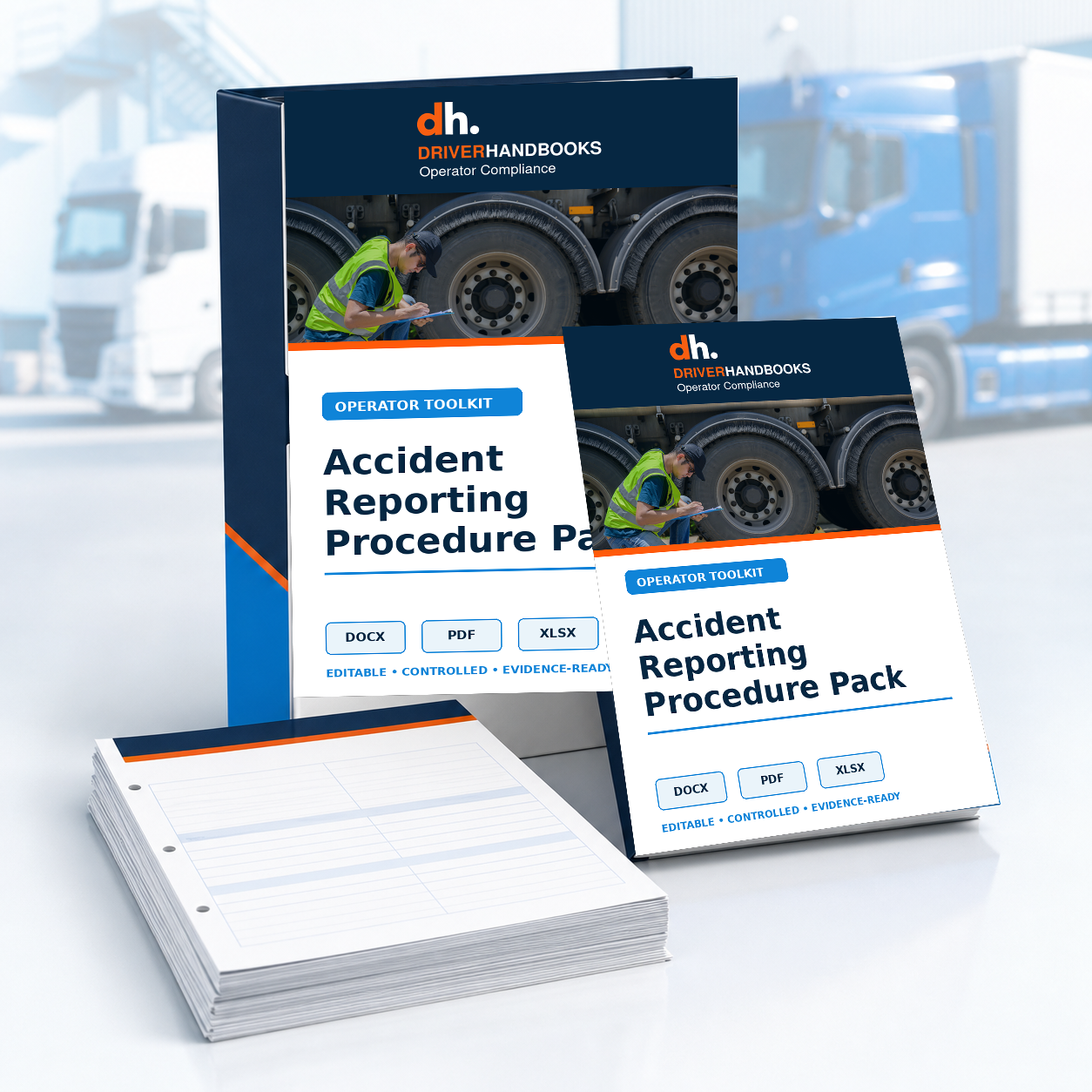
Accident reporting procedure pack: collision steps, cab bump cards, a photo checklist, insurer notification flow and RIDDOR touchpoints, in Word format.
What it is
The minutes after a collision decide the cost of the claim, and drivers handle them badly when nobody has told them what to do. This pack is a complete accident reporting procedure for road fleets: what the driver does at the scene, what the office does next, and how the incident is recorded, notified and closed. It includes the piece most fleets are missing, a bump card in every cab that walks the driver through the scene step by step.
What is inside
- The accident reporting procedure from scene to file closure, with responsibilities assigned at each stage
- Cab bump cards: a fold-out prompt covering safety first, what to say and not say at the scene, and the details to capture before anyone leaves
- Photo checklist so every incident produces usable evidence: positions, damage, registrations, road layout and conditions
- Insurer notification flow with timescales, because late notification is the quickest way to lose control of a claim
- RIDDOR touchpoints identifying which incidents cross into reportable territory and who makes that call
Who it is for
Hauliers, van fleets, coach operators and own-account fleets of any size. Fleet and claims managers use the accident reporting procedure to cut third-party costs, because first-day evidence and fast notification are where claims are won. Transport managers use it because collision follow-up is part of the systems DVSA expects to see, and a drawer full of half-completed incident forms says the opposite. Coach operators also use it to record passenger incidents alongside vehicle damage.
Format and updates
Editable Word format with a version control sheet at the front, plus the bump card laid out for printing at cab size. Add your insurer’s details, your claims line and your named contacts, then brief it at the next driver meeting.
How to put the pack into use
- Replace every marked placeholder.
- Compare the controls with your vehicles, work, licence commitments and current official guidance.
- Remove irrelevant options and add local responsibilities and escalation routes.
- Approve a controlled version and brief affected people.
- Use the registers, sample completed records and correct failures.
Questions about this pack
What is a bump card?
A printed prompt card kept in the cab. After a collision the driver follows it line by line: make the scene safe, admit nothing, photograph the listed items and phone the numbers on the card. It works because nobody thinks clearly straight after an impact.
Does it cover RIDDOR reporting?
It identifies the touchpoints where a road incident becomes RIDDOR reportable, such as injuries connected to loading or unloading, and assigns who assesses and submits the report, so the decision is never left to the driver.



Reviews
There are no reviews yet.