
Why tipper work needs its own handbook
Construction transport works under close enforcement and client scrutiny.
Fixed quotes, reply within one working day
Construction transport works under close enforcement and client scrutiny.
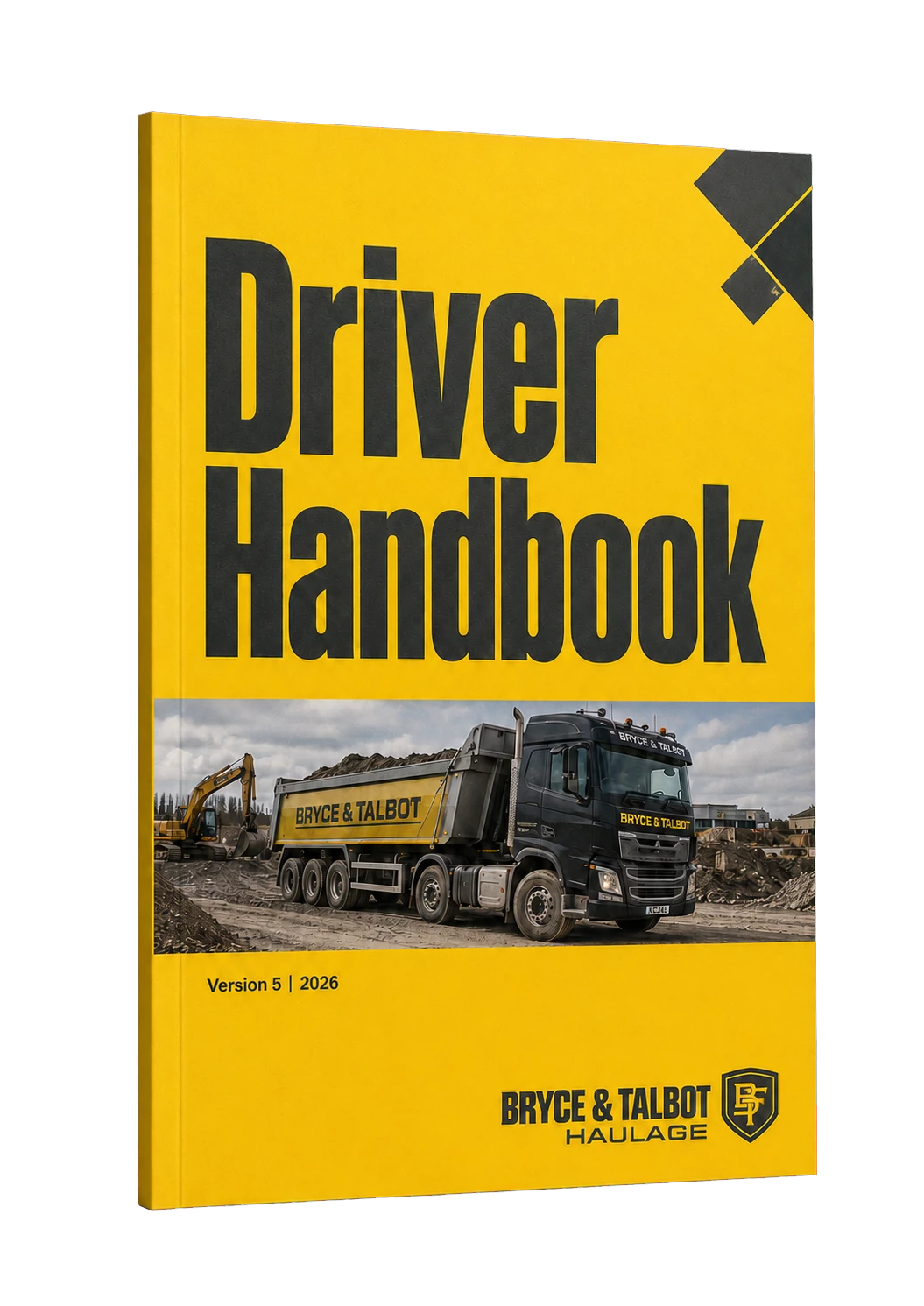
Construction transport works under close enforcement and client scrutiny.
Clear, practical support written around the operation you run and the evidence an examiner expects to see.
Construction transport works under close enforcement and client scrutiny.
A tipper driver can visit three sites in a day, each with its own induction, traffic marshals, exclusion zones and unloading rules.
Many major contractors now write the CLOCS Standard into their supply chains, and CLOCS expects fleet operators to belong to a recognised independent accreditation scheme such as FORS, or to run a suitable management system of their own.
Few vehicles are as easy to overload as a tipper.

Construction transport works under close enforcement and client scrutiny. Tippers and mixers work on tight margins, tight sites and tight schedules, they carry some of the densest loads on the road, and much of their work ends on urban streets shared with pedestrians and cyclists. When a serious incident involves a construction vehicle in a town or city, the operator's paperwork is read line by line.
A tipper driver handbook exists for that reading as much as for the daily round. It has to hold the standard compliance spine and then answer the questions specific to this work: what the driver does at the site gate, how the load is sheeted, what stops a body-up drive-off, and why the eight-wheeler that weighed light at the quarry is overweight at the weighbridge. Generic handbooks answer none of those.
A tipper driver can visit three sites in a day, each with its own induction, traffic marshals, exclusion zones and unloading rules. The handbook should make the driver's position clear: site rules are mandatory, the marshal's instruction stands unless it is unsafe, and if a site instruction would break the law or endanger anyone, the driver stops and phones the office rather than improvising.
Good construction logistics discipline also means arriving right: booked in, on the approved route, not queuing on the public highway outside residential windows at 06:30. The tipper driver handbook should carry the practical points that keep sites and neighbours onside, because contractors drop hauliers who cause problems at the gate far faster than they drop hauliers who are merely expensive.
Many major contractors now write the CLOCS Standard into their supply chains, and CLOCS expects fleet operators to belong to a recognised independent accreditation scheme such as FORS, or to run a suitable management system of their own. For drivers this lands as specific, auditable requirements: vulnerable road user training, side guards, cameras and sensors used as intended, blind spot signage, and compliance with construction logistics plans that dictate routes and hours.
The handbook is where those scheme obligations become driver instruction. A tipper driver handbook with a dedicated CLOCS and FORS section gives the site auditor documented proof that drivers were told, gives the transport manager one place to update when scheme versions change, and gives the driver a plain statement of what the cameras and sensors are for. Fleets working towards FORS Silver to win urban work have a large part of the driver-facing evidence ready when that section already exists.
Few vehicles are as easy to overload as a tipper. Wet weather changes the weight of a load of muck between loading and weighing, loading shovel operators fill by eye, and axle weights shift as dense material sits forward or back in the body. Overloading offences do not require intent: both driver and operator can be prosecuted on the weighbridge figure alone.
The tipper driver handbook should give drivers real controls rather than a warning: know the plated weights and the practical payload for each body and material, use on-board load indicators where fitted, challenge the loading operator rather than accept a heaped bucket, and use the first available weighbridge when in doubt, with the company's explicit backing to return and tip off excess. A driver who believes the office would rather lose twenty minutes than run overweight behaves differently at the loading face.
The two moments that hurt tipper drivers are sheeting and tipping. On sheeting, the handbook should require use of the fitted automatic or ground-operated system, ban climbing on the body where any alternative exists, and state plainly that an inadequately secured or uncovered load that can escape onto the highway may be an offence and is the fleet's most visible advert for poor control.
On tipping: firm level ground, checked overhead clearance including power lines, cab doors closed, no one beside the vehicle, and the body fully lowered before moving off. Body-up drive-offs into power lines and bridges keep appearing in incident reports because the pressure to clear the tip quickly never goes away. A tipper driver handbook that sets out the stop points, and a company that visibly enforces them, is what interrupts that sequence.
A tipped body catching a bridge is only half the bridge story. Construction routes are full of low arches on diverted approaches, and a bridge strike brings Network Rail costs and police interest, and cases referred to a traffic commissioner can lead to a driver conduct hearing, with the operator and transport manager called to a public inquiry. The handbook should require route planning against vehicle height, a cab height card that matches the vehicle as loaded, and an unambiguous instruction that satnav routing does not overrule a height sign.
Wheel washing closes the loop at the gate: use the wash where provided, inspect wheels and mud flaps before rejoining the highway, and treat mud on the road as the hazard it is, because depositing it on the highway is an offence a local authority can prosecute. These unglamorous paragraphs in a tipper driver handbook are precisely the ones that keep a construction haulier's name out of the local paper and the public inquiry list.
Every document is shaped by transport managers and compliance specialists with more than 20 years of experience, including DVSA investigations, Public Inquiries and Traffic Commissioner hearings.
Get a quoteSite induction and marshal rules, CLOCS and FORS obligations, overloading controls, sheeting and tipping procedure, bridge strike prevention and wheel washing. These sit on top of the usual hours, checks and defect reporting spine.
Many contractors specify compliance with the CLOCS Standard, which expects a recognised independent accreditation scheme such as FORS, or an equivalent management system. Urban frameworks increasingly ask for FORS Silver, and the handbook is part of the documented driver instruction auditors check.
Both driver and operator can be prosecuted, and no intent is needed. That is why the handbook should give drivers practical controls, including company backing to weigh in doubt and return to tip off excess, rather than a bare instruction not to overload.
Written tipping procedure with hard stop points, in-cab warning devices where fitted, and a culture where lowering the body fully before moving is never traded for speed. The handbook sets the procedure; supervision and telematics make it stick.
Yes. Traffic commissioners treat bridge strikes as a serious indicator of weak systems, and a referral can bring a driver conduct hearing and a public inquiry for the operator and transport manager. Route planning rules and accurate height cards in the handbook are your first line of defence.
Something else on your mind? Call 020 8088 8371 or use the form below.
Get a clear recommendation from transport managers and compliance specialists with more than 20 years of experience, including DVSA investigations, Public Inquiries and Traffic Commissioner hearings.