Handbook specialists

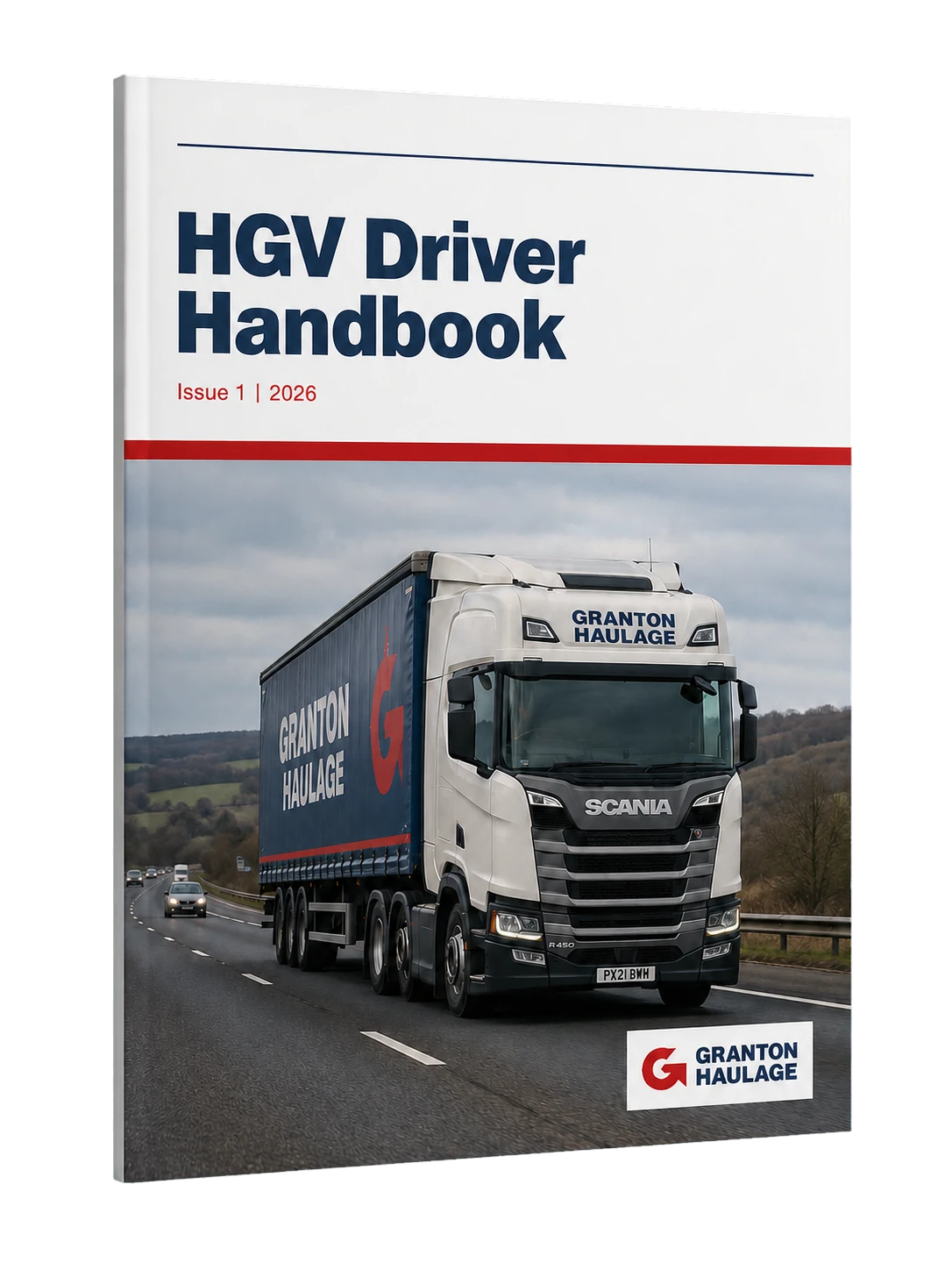
HGV driver handbook written for your operation

Fixed quotes, same day response

An hgv driver handbook should reflect how your transport operation actually runs.
Transport managers and compliance specialists 20+ years practical experience Fixed written quotes

20+Years of casework
100%Fixed written quotes
Home/HGV driver handbook written for your operation

An hgv driver handbook should reflect how your transport operation actually runs.

Clear, practical support written around the operation you run and the evidence an examiner expects to see.

Start here

Get a specialist recommendation

Answer a few focused questions. A transport manager or compliance specialist will review your answers and recommend the right next step.

Get your fixed written quote

What a proper HGV driver handbook looks like in practice

An hgv driver handbook should reflect how your transport operation actually runs. Traffic Commissioners and DVSA examiners look for systems that work in real conditions, not copied policy. That means your depots, your fleet, your work types and your routes set out clearly. I write these from the same position used when representing operators at public inquiry. Every section ties back to operator licence undertakings and the Guide to Maintaining Roadworthiness. If a driver is stopped at the roadside, they should be able to explain what they do and why, based on what is written. If they cannot, the handbook has missed the mark.

Drivers’ hours and tachograph rules, EU and GB domestic

Your hgv driver handbook must distinguish properly between EU drivers’ hours rules and GB domestic rules. Most HGV operations fall under EU rules, daily driving limit of 9 hours, extendable to 10 twice a week, weekly limit of 56 hours and 90 hours over a fortnight, with 45 minute breaks after 4.5 hours. Daily and weekly rest must also be set out clearly. GB domestic rules are different and apply in limited cases, for example certain local operations. Drivers must know which regime they are working under. Tachograph use should cover mode selection, manual entries, card handling, printouts and faults. DVSA will expect the driver to explain this without hesitation.

Walkaround checks, defect reporting and maintenance control

Daily walkaround checks form part of your licence undertakings. The handbook should list exactly what drivers check before use, tyres, lights, mirrors, body condition, load security and leaks. It must also explain how defects are reported and what happens next. This needs to match your actual system, paper or digital. Drivers should understand what makes a vehicle unroadworthy and when it must not be moved. Reference to the Guide to Maintaining Roadworthiness should align with your inspection intervals and records. Examiners regularly compare what is written to maintenance files. If there is a mismatch, it raises questions quickly.

Load security and safe loading responsibilities

Load security is a regular DVSA enforcement area. A lorry driver handbook should make clear who is responsible at each stage, driver, loader and operator. It should cover securing methods for your typical loads, whether that is palletised freight, steel, plant or bulk. Include use of straps, chains, curtains and headboards, and the limits of each. Drivers need to understand weight distribution and how an unstable load affects braking and control. Practical instruction matters here. Drivers should be confident to refuse an unsafe load and know they are supported when they do so.

Bridge strikes, route planning and vehicle dimensions

Bridge strikes are treated seriously and often lead to regulatory action. Your handbook should set out route planning requirements, use of suitable navigation and checking vehicle height before leaving site. Drivers must know where the height is displayed in the cab and confirm it matches the vehicle. Include clear instructions on dealing with diversions and low bridges. If a strike occurs, the handbook should state who must be contacted immediately and what information is required. This is basic control, but it is often missing or unclear in generic documents.

Weights, overloading and roadside enforcement

Overloading is straightforward for DVSA to detect. The hgv drivers handbook must set out gross vehicle weight, axle limits and train weight where relevant. It should explain how loads are checked, use of weighbridges and any on board systems. Drivers need clear instruction on what to do if they suspect an overload. They should not move a vehicle unlawfully. Include the consequences, prohibitions, penalties and impact on your operator licence. Examiners expect to see that drivers have been instructed properly and that the system works in practice.

Written around your fleet, your risks and your work

A handbook should reflect your fleet and the work you do. Rigids, artics and specialist vehicles all bring different risks. Construction, retail and container work each have their own pressures. Include site rules, PPE, reversing procedures and use of banksmen where required. If you operate under FORS, the relevant Bronze, Silver or Gold requirements should be built into the document. Where London schemes such as DVS or PSS apply, they should be covered clearly. This is where a generic handbook falls short. Written properly, it mirrors how your drivers work day to day.

Prefer to talk it through?Call 0208 088 8371
Backed by real transport experience

Documents built for scrutiny, not a shelf

Every document is shaped by transport managers and compliance specialists with more than 20 years of experience, including DVSA investigations, Public Inquiries and Traffic Commissioner hearings.

Get your fixed written quote
20+Years of casework
100%Fixed written quotes
Quick answers

Questions operators ask us

What must an HGV driver handbook include as a minimum?

It should cover drivers’ hours rules, clearly distinguishing EU and GB domestic regimes, tachograph use, walkaround checks, defect reporting, maintenance arrangements, load security, weights and route planning. It must reflect your operator licence undertakings.

Why is it important to separate EU and GB domestic drivers’ hours?

Because the limits and requirements are different. Applying EU rules to a domestic operation, or the other way round, leads to errors. DVSA will expect drivers to know which set of rules applies to their work.

How often should we review our handbook?

At least once a year and whenever your operation changes. New vehicles, new work or changes to legislation should all trigger a review. The document should reflect current practice.

Do drivers need to sign the handbook?

Yes. A signed record shows that instructions have been issued and accepted. This can be important if you are asked to demonstrate control at an inquiry or during an investigation.

Can we rely on a generic handbook?

Generic documents rarely match how an operation actually runs. Examiners compare written policy to real activity. If it does not line up, it weakens your position quickly.

Does the handbook apply to agency drivers?

Yes. Any driver working under your operator licence must follow your systems. They should be given the relevant instructions before taking a vehicle and confirm they understand them.

Something else on your mind? Call 0208 088 8371 or use the form below.

Driver Handbooks assessment

Tell us what your operation needs

Get a clear recommendation from transport managers and compliance specialists with more than 20 years of casework, including DVSA investigations, Public Inquiries and Traffic Commissioner hearings.

About 3 minutesNo obligationSame-day response
1 Need 2 Operation 3 Timing 4 Contact
Step 1 of 4

What would you like help with?

Step 2 of 4

Tell us about the operation

Step 3 of 4

What is driving the work?

Step 4 of 4

Where should we send the recommendation?

Your answers will be reviewed by people with practical transport-management and compliance experience, not scored by an automated document generator.